



GMC Winter Driving New England
| Sales | ||
| Day | Open | Closed |
| Monday | 9:00AM | 7:00PM |
| Tuesday | 9:00AM | 7:00PM |
| Wednesday | 9:00AM | 7:00PM |
| Thursday | 9:00AM | 7:00PM |
| Friday | 9:00AM | 6:00PM |
| Saturday | 9:00AM | 5:00PM |
| Sunday | Closed | Closed |
GMC Trucks and SUVs Built for New England Winter Driving
New England winter driving is not just about getting moving. It is about maintaining control when traction changes from dry pavement to slush to refrozen ice in the same commute. GMC trucks and SUVs are built around drivetrain options and stability systems that help you manage that variability with confidence. This guide breaks down how AWD and 4WD work, what Snow mode is actually doing behind the scenes, and what to prioritize in tires, driving technique, and vehicle setup so you can choose the right GMC for your winter routine.
Is GMC good in snow and what matters most for winter control
GMC can be a strong choice for snow when the vehicle is configured for your conditions and driven with the right technique. Winter performance comes from a full system, not one feature. The foundation is traction from the tires, then drivetrain torque delivery, then stability control that manages wheel slip and yaw when the vehicle starts to rotate. The most effective winter setups combine the right tire type with a drivetrain that matches the level of snow you see, and stability systems that reduce wheel spin before it turns into a slide.
- Tires drive traction first because rubber compound and tread design control how much grip you have available to accelerate, steer, and brake.
- Drivetrain manages torque distribution by sending power where it can be used without wasting it as wheel spin.
- Stability systems manage control by reducing torque and applying targeted braking to help correct a skid before it develops.
- Driver inputs complete the system because smooth acceleration and early braking keep the tires inside their traction limits.
If you want winter confidence, focus on tire choice, AWD or 4WD selection, and driver mode usage. Heated comfort features can make winter easier, but they do not replace traction and control systems.
AWD vs 4WD in snow: the real mechanical difference
AWD and 4WD are often treated like the same thing, but they are built for different operating patterns. AWD is typically designed for on road traction changes and uses sensors and coupling hardware to send power to the wheels that can use it. 4WD is typically designed for heavier duty traction demands and uses a transfer case with fixed drive modes, including a low range setting on many trucks for maximum control at low speeds. The right choice depends on how often you face deep snow, steep grades, unplowed roads, or traction that changes block by block.
- AWD operation is generally automatic and manages torque distribution without requiring driver input, which is useful when conditions vary during daily driving.
- 4WD operation uses a transfer case and driver selectable modes, commonly 2WD, 4HI, and on many models 4LO for low speed torque multiplication and control.
- AWD traction profile fits rain, light snow, and mixed surfaces where you want stability and predictable handling without constant mode changes.
- 4WD traction profile fits deeper snow, unplowed roads, and situations where you need stronger mechanical grip and controlled low speed movement.
A common winter mistake is leaving a traction focused mode engaged when you do not need it. Use the drivetrain mode that matches conditions, then return to 2WD or normal driving mode when roads improve to reduce mechanical drag and improve efficiency.
Is AWD necessary for winter driving in New England
AWD is not strictly necessary for every winter driver, but it can be the most convenient solution for mixed conditions. When you see light snow, freezing rain, slush, and wet pavement in the same day, AWD can help reduce wheel spin at launch and improve stability when grip changes unexpectedly. That said, tires and driving technique still matter more than drivetrain alone, because AWD helps you accelerate and maintain traction, but it does not shorten braking distances in the way many drivers assume.
If you drive primarily on plowed roads, want extra stability on slick surfaces, and prefer a system that manages traction automatically, AWD can make daily winter driving easier. If you regularly face deep snow, steep unplowed routes, or heavy duty use cases, a 4WD truck may be the more appropriate tool.
Is 4WD or AWD better for winter and how to choose for your route
The better system is the one that fits your road conditions and how consistently you want to manage drive modes. AWD is typically best when the surface changes constantly and you want steady traction support without manual mode switching. 4WD is typically best when traction is consistently poor, snow is deeper, or you need stronger mechanical engagement to keep moving at low speeds. In New England, many households benefit from AWD for daily driving and 4WD for drivers who need to reach work sites, rural roads, or plowing and towing conditions.
- Choose AWD when you want on road traction confidence for mixed winter driving and do not want to manage mode selection constantly.
- Choose 4WD when you need stronger capability for deeper snow, unplowed roads, and controlled low speed movement.
- Choose based on braking reality because both systems help you go, but stopping still depends heavily on tires and traction.
- Choose based on clearance needs because deeper snow requires ground clearance and underbody protection, not only drivetrain engagement.
What does Snow mode do in GMC and what it changes mechanically
Snow mode is designed to reduce wheel spin and stabilize vehicle behavior when traction is low. While exact calibration varies by model, the goal is consistent. The system typically softens throttle response so small pedal movements do not send a sudden torque spike to the wheels. It can also adjust transmission shift strategy to reduce torque delivery spikes, limit aggressive downshifts that can break traction, and work alongside traction control and stability systems to correct slip earlier. The result is smoother launches, less fishtailing risk, and more predictable control in slush and light snow.
Snow mode is not a substitute for winter tires and it is not intended for dry pavement. Use it when surfaces are slick and you want smoother torque delivery, then switch back to normal settings when roads are clear.
What does snow mode do on a GMC Sierra 1500 and why it helps in snow
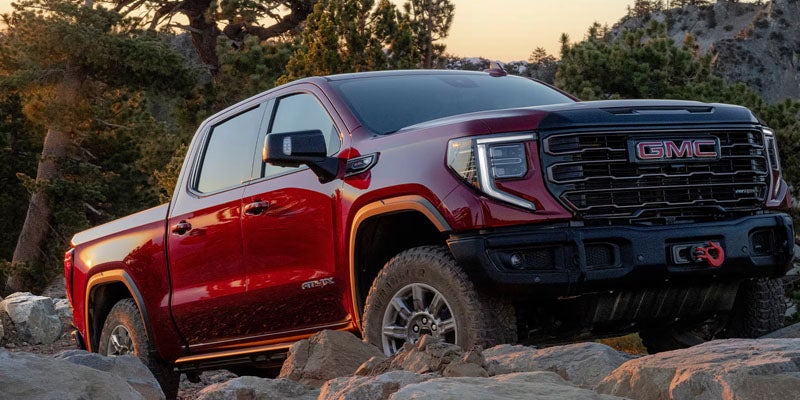
The Sierra 1500 is a common winter choice because its available 4WD hardware, ride height, and truck chassis give it strong capability when snow depth and surface variability increase. When Snow mode is available, it focuses on controlled torque delivery so the truck can start moving without breaking traction. That matters because trucks can deliver strong torque and if that torque hits the tire too quickly on ice, wheel spin rises fast and stability control has to intervene aggressively. Snow focused calibration aims to prevent that initial wheel spin so the system spends less time correcting and more time maintaining forward movement.
The best practice is pairing Snow mode with the correct drivetrain setting and tires. Use 4HI for slippery roads and steady snow conditions, and reserve 4LO for very low speed situations where you need maximum control, such as deep snow starts or steep slick grades.
What is the best GMC for snow and what to prioritize by vehicle type
The best GMC for snow depends on whether your winter challenges are traction, depth, terrain, or duty cycle. If you want an everyday vehicle for winter commutes and plowed highways, AWD equipped SUVs can provide balanced traction and stable on road handling. If you want maximum capability for deeper snow, work demands, or unplowed routes, a 4WD truck like Sierra is often the stronger tool because it combines transfer case control with higher ground clearance and robust chassis hardware. Trims built for more demanding conditions often add underbody protection, off road oriented tires, and suspension tuning that helps manage uneven winter surfaces.
- For daily mixed conditions prioritize AWD capability, stability systems, and visibility and safety technology that supports awareness in poor weather.
- For deeper snow and work demands prioritize 4WD with driver selectable modes and the clearance and protection that helps the vehicle keep moving without underbody contact.
- For cold comfort prioritize heated seating surfaces and steering wheel heating to reduce fatigue and improve control during long drives.
- For confidence in low visibility prioritize camera views and safety alerts that help reduce blind spots and improve awareness.
Is GMC Sierra good in snow and how to set it up for winter
Sierra can be a strong winter truck when it is set up with the right tires and drivetrain usage. The key is not just having 4WD. It is using it correctly. Auto 4WD can be useful when traction changes constantly, while 2WD can be appropriate when roads are clear. 4HI is designed for slippery conditions where you need consistent traction engagement. The most important decision is matching tires to the temperatures and surfaces you face, then using smooth driving inputs so traction control does not have to do all the work.
- Use proper tires such as winter tires for severe conditions or high quality all terrain tires when you balance winter use with year round utility.
- Use the correct drive mode engage 4WD or Auto 4WD when needed, then return to 2WD when traction is stable for better efficiency.
- Drive with smooth inputs accelerate gradually, brake early, and avoid sharp steering that can exceed tire grip on ice.
- Increase following distance because braking distance rises dramatically on slick surfaces, even with the best stability systems.
Disadvantages of AWD and what to consider before choosing it
AWD is highly useful for traction management, but it comes with tradeoffs you should understand. AWD adds hardware, which can add weight and mechanical complexity. That can increase mechanical drag in some conditions and reduce fuel economy compared to a similar 2WD setup. AWD also does not replace good tires and it does not automatically make braking shorter, so drivers who rely on AWD without adjusting speed and following distance can still run out of traction.
- Efficiency tradeoff because additional drivetrain components can increase rolling and drivetrain losses.
- Maintenance awareness because additional components mean you should stay current on fluid service and tire matching.
- False confidence risk because AWD helps you accelerate, but does not guarantee shorter stopping distances.
- Tire matching requirements because uneven tire wear can affect traction behavior and drivetrain load on some systems.
Winter driving techniques that protect traction and control
Winter driving skill is about keeping your tires inside their available traction limits. That means lower speed, smoother pedal inputs, and earlier braking. These techniques work with GMC traction and stability systems rather than forcing the vehicle to correct large traction losses after they happen. If you want a simple winter rule, drive like you are managing grip as a limited resource.
- Slow down because speed is the fastest way to exceed grip on snow and ice.
- Smooth inputs avoid sudden braking or sharp turns and apply throttle and brakes gradually.
- Braking use firm steady pressure to utilize ABS and keep steering control rather than locking wheels.
- Distance leave extra space between you and other vehicles.
- Hills build momentum on flats and coast slowly downhill to avoid traction breakaway.
Vehicle preparation for New England winter driving
Preparation is what turns winter driving into routine driving. Before the season starts, check tire tread depth and pressure, test battery health, and confirm wiper performance and washer fluid rated for freezing temperatures. Keep your fuel tank above half when storms are possible and consider carrying an emergency kit with blankets, food, water, and a flashlight. These steps do not just improve comfort. They reduce the risk of being stranded and help your vehicle start and operate reliably in cold weather.
Model year anxiety and how to shop Sierra with confidence
Shoppers often search what year to stay away from for Sierra 1500, but there is rarely a single answer that applies to every used truck. The practical way to reduce risk is evaluating service history, inspection results, recall completion, and how the truck behaves under load during a test drive. A well maintained truck with documented care is typically a stronger buy than a lower priced option with unknown history. If you are comparing new and used Sierra options, we can help you review the details and match the right truck to how you drive in winter.
(Note: This article focuses on providing valuable information and does not mention specific pricing, for more information about financing and car buying, please reach out to our dealership.)